Daily Edition · Page 1

THE DAILY INDEX

Technology, AI, software, security, crypto and business

Across today’s newsletters

Today’s Index
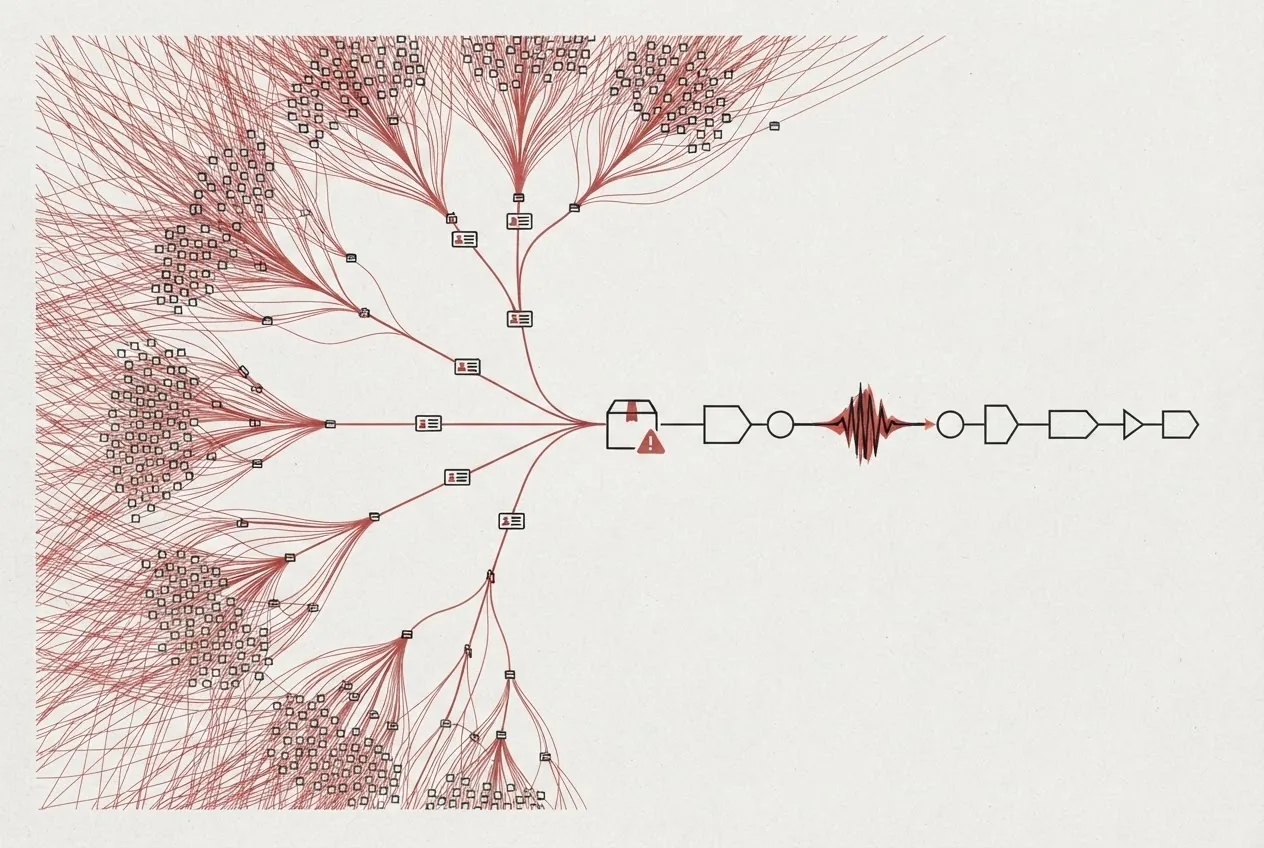
A compromised software package sits within a branching build pipeline, with one short exposure point spreading toward numerous organizations and CI/CD systems.
AI-generated editorial illustration

OVER 2,500 ORGANIZATIONS IMPACTED BY LITELLM SUPPLY CHAIN ATTACK

TeamPCP compromised LiteLLM after its CI pipeline automatically installed a trojanized Trivy release. LiteLLM versions 1.82.7 and 1.82.8 ran malicious code on every Python invocation. The packages were live for 40 minutes, exposing 434,000 CI/CD pipelines across 2,500 organizations. Treat LiteLLM-accessible credentials as exposed. Validate and rotate secrets, accounts, and sessions, then review logs.

HOW WE BUILT A SOFTWARE FACTORY TO DRIVE ASTRO'S GITHUB ISSUE COUNT TO ZERO

The Astro team automated GitHub issue triage with isolated AI subagents running in GitHub Actions that reproduce bugs, diagnose root causes, and ship preview releases for reporters to verify. They drove open issues from 200+ down to about 30, with zero expected within a month. The pipeline works as a state machine driven by issue labels, and agent failures are treated as signals of underlying problems in the codebase like opaque abstractions or missing tests.

GOOGLE REVEALS 2026 HARDWARE LINEUP: PIXEL 11, PIXEL WATCH 5, AND PIXEL TAG

The Pixel 11 series looks a lot like last year's lineup, but with some minor tweaks, a few new hardware extras, and even more Gemini-powered AI. The phones are joined by an updated Pixel Watch 5 and the Pixel Tag, Google's first in-house tracker device. The most notable hardware innovation for the new Pixel lineup is the return of a notification LED for the Pro phones. The ring of RGB LEDs is housed inside the flash assembly on the back of the phone and lights up only when the user is using Gemini or when there is an incoming call from specific contacts for both standard phone calls and voice calls in WhatsApp.

NORTHROP'S ROBOT SPACE MECHANIC IS A NEW WAY TO KEEP SATELLITES AT WORK LONGER

Northrop Grumman launched a Mission Robotic Vehicle (MRV) and three Mission Extension Pods (MEPs) into orbit on a SpaceX Falcon 9 rocket in July. The MRV is a powerful satellite equipped with two advanced robotic arms. MEPs are simpler satellites that are essentially modular propulsion systems. In 2027, the MRV will use its robotic arms to attach one of the MEP pods to a telecommunications satellite, which should keep it in orbit for years to come.

TLDR IndexPage 1