Daily Edition · Page 1

THE DAILY INDEX

Technology, AI, software, security, crypto and business

Across today’s newsletters

Today’s Index
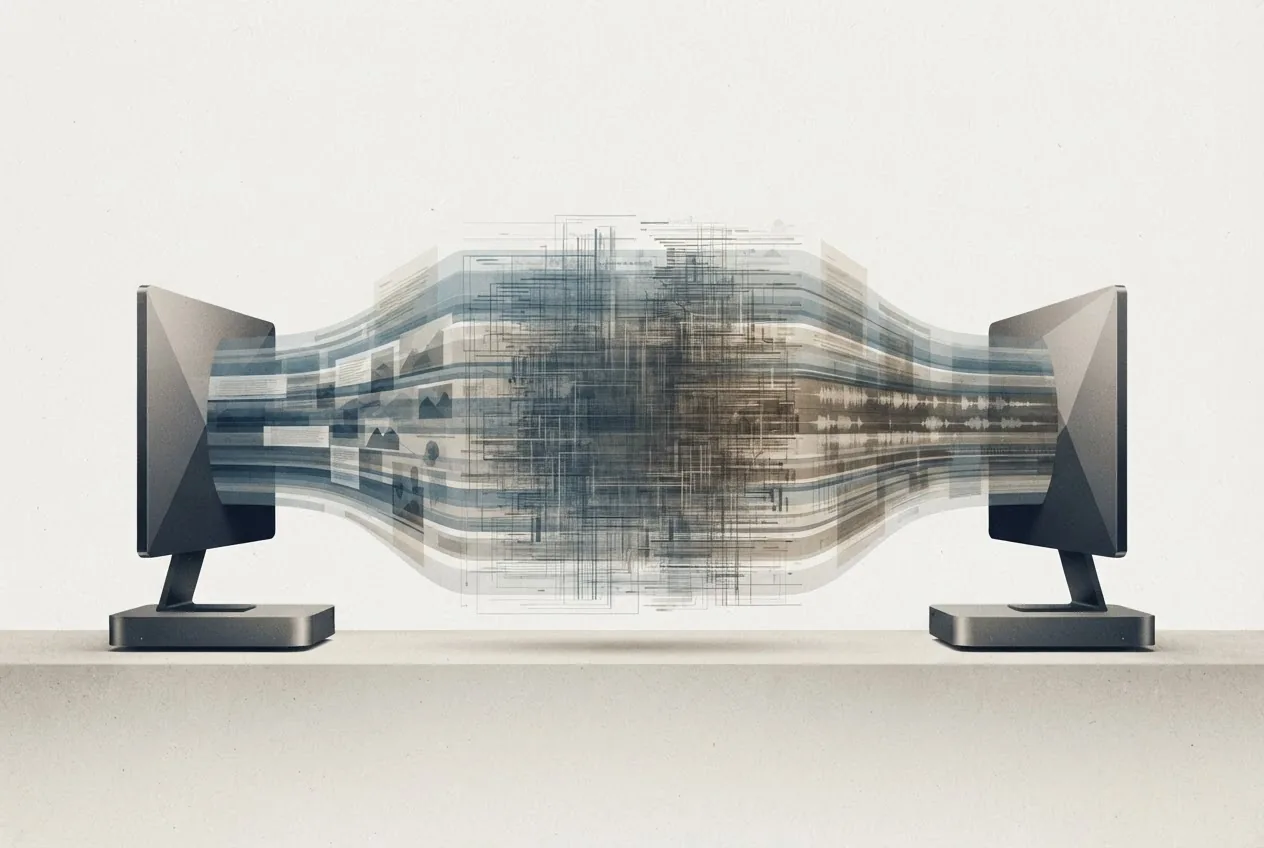
Two desktop computers share a continuous stream of text, images, video, audio, and code, representing Muse Spark Open's large open-weight model running locally across paired machines.
AI-generated editorial illustration

ROCKET LAB DELAYS NEUTRON TO 2027 OVER VOIDS IN A CARBON-COMPOSITE TANK DOME

Rocket Lab moved Neutron's debut to 2027 after finding voids in the carbon-composite layers of the forward dome on its first-stage propellant tank. A replacement dome is being built, and Rocket Lab must still inspect it, assemble the first stage, and complete pressure and cryogenic tests before setting a firm date. It's the rocket's fourth slip since its 2021 unveiling, following a January tank rupture in testing, and shares fell about 10% after hours.

BRINGING THE MAGIC: GOOGLE BREAKS OPEN A BOTTLENECK IN QUANTUM COMPUTING

Google Quantum AI has demonstrated that 'magic state cultivation' works in practice on its Willow processor. Magic states help researchers create the operations they need for going beyond classical computing. Creating high-quality, error-corrected magic states is incredibly resource-heavy. This post details how Google Quantum AI created a magic state cultivation protocol that achieved a 40-fold reduction in errors. The breakthrough is a crucial step towards scaling up quantum computing to practical use.

AI AGENTS MADE 138 MILLION CRYPTO PAYMENTS IN A YEAR. MOST WERE TINY

Chainalysis data shows autonomous AI agents executed over 138 million cryptocurrency payments through Coinbase's x402 protocol on Base between mid-2025 and Q3 2026, up from approximately 1,500 transactions a year earlier. More than 87% of payments fell between 0.01 cents and 10 cents, validating stablecoin micropayments as a use case legacy payment rails cannot serve at that unit size. American-linked wallets drove 88.1% of AI model inference spending, while Chinese-linked wallets led security and code-analysis service purchases despite accounting for just 0.1% of inference spending. TRM Labs cautions that a portion of the recorded activity may reflect scripts or self-dealing rather than genuine autonomous agents, suggesting the headline figures likely overstate actual agentic commerce volume.

ASML SAYS 2027 AND 2028 TOOL SUPPLY WON'T MEET DEMAND AS Q3 SHIPMENTS HIT 113 SYSTEMS

ASML sold 113 new lithography systems in Q3, up from 86, for record sales of €11.7 billion. It now expects planned 2027 and 2028 supply to fall short of demand, even after its planned 30% capacity boost on a 2026 base of about 65 low-NA EUV and 130 DUV immersion tools, and is investigating adding more for 2028. Some customers want to place orders for 2029 and 2030. Q4 sales are guided to €14.2 to €15.2 billion.

BUILDING A COMPUTER THAT CAN PAUSE AND RESUME IN MILLISECONDS: INSIDE THE MICROVM ARCHITECTURE BEHIND MANAGED AGENTS

DigitalOcean's Firecracker platform separates agent sessions from their hosts using checkpointed disk, memory, and virtual-device state, with lazy loading to avoid downloading whole snapshots before resuming. Internal tests report under 200 milliseconds at p50 on the warm-template path, while external connections and API side effects remain outside the checkpoint.

CITIZENLAB DETAILS NEW SPYWARE TRIGGERED BY ONLINE ADVERTISING

Discover-Tech, an Israeli firm presenting itself as an ad vendor, displayed 442 million ads on more than 120,000 websites and apps, including the BBC, The New York Times, and Duolingo. Some of those ads carried zero-click spyware that infected phones and computers simply by appearing on screen, with targets ranging from Al Jazeera journalists to NATO and NVIDIA staff. It is the first confirmed case of government-backed zero-click spyware delivered through online ads. Google has since blocked Discover-Tech from its ad platforms.

AYAR LABS AND GUC SIMULATE A 3 KW CO-PACKAGED OPTICS PACKAGE, AND ONLY LIQUID COOLING HOLDS SPEC

Ayar Labs and GUC simulated a 105mm by 140mm package with two XPUs, eight HBM4 stacks, and eight TeraPHY optical engines, offering over 100 Tbps of optical bandwidth at more than 3 kW. A standard air heatsink at 5 to 6 m/s failed spec, while an impingement liquid cold plate at 4.5 L/min kept the optical engines under 100°C. Results use static power assumptions, so dynamic workload simulation is next.

TLDR IndexPage 1