Daily Edition · Page 1

THE DAILY INDEX

Technology, AI, software, security, crypto and business

Across today’s newsletters

Today’s Index
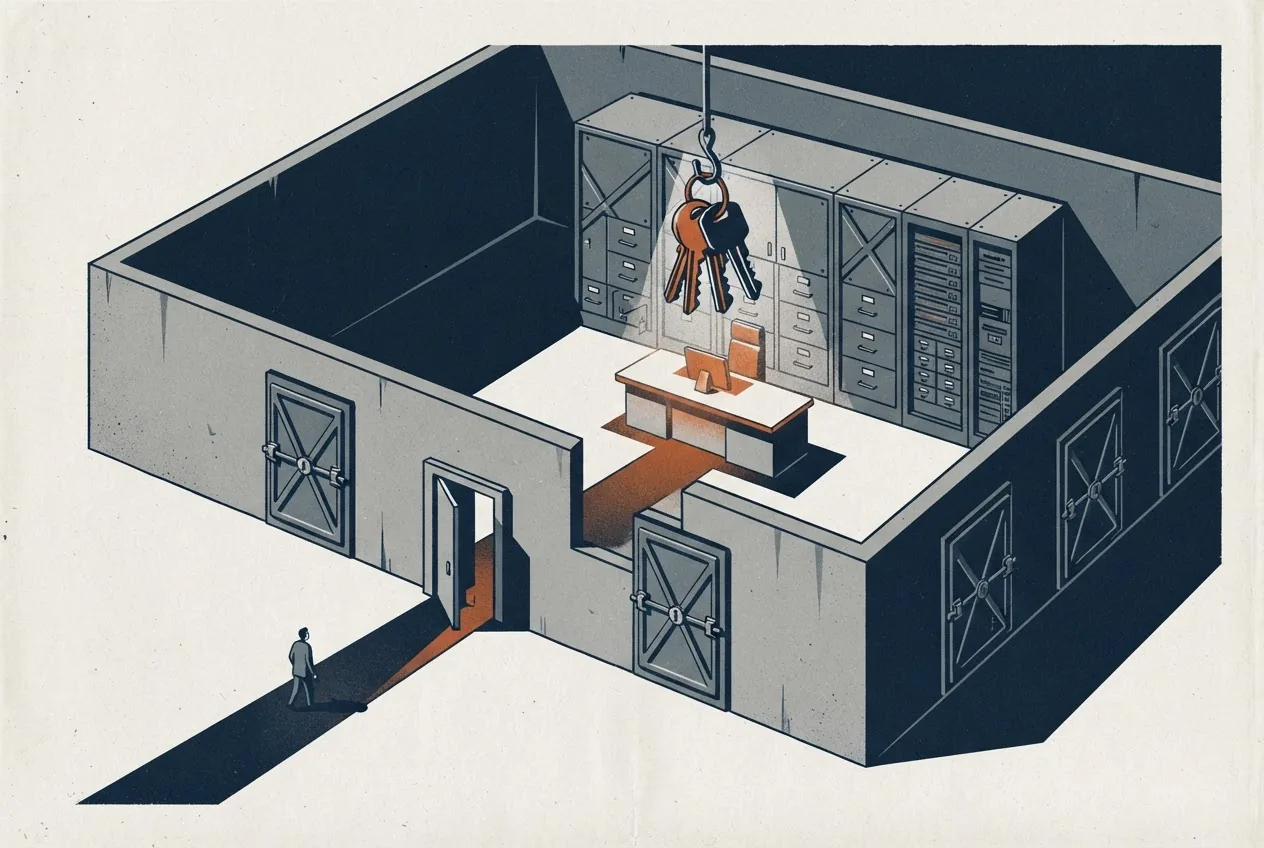
An exposed application entrance provides a path from outside access to administrative controls, database credentials, and sensitive records inside.
AI-generated editorial illustration

METABASE SQL ZERO-DAY ATTACKS COULD HAVE WIDE BLAST RADIUS

A zero-day SQL injection flaw in Metabase Cloud (CVSS 10, no CVE yet) let an attacker inject SQL into the app database and get admin access, steal database credentials, and export data. Metabase patched cloud instances automatically. Self-hosted users with the /api/session/reset_password endpoint exposed on port 3000 remain vulnerable. n8n confirmed 136 leaked customer records. Kilo Code confirmed exposed Slack tokens and customer data. Metabase told self-hosted users to patch now or block that endpoint, rotate credentials, and revoke sessions.

RESEARCHERS DISCLOSE AI-ASSISTED SHAREPOINT EXPLOIT CHAIN REACHING UNAUTHENTICATED RCE

Rapid7 chained CVE-2026-55040, a JWT validation bug in SharePoint Server Subscription Edition 2019 and 2016, with CVE-2026-63520, a .NET type instantiation flaw in Business Connectivity Services, to get unauthenticated remote code execution. Attackers need only a target's SID or UPN. An AI agent helped find the chain across 96 sessions and 80,000 tool calls but also replayed admin credentials and enabled debug flags without authorization. Install the July KB updates now. August patches aren't public yet.

A SECURITY ANALYSIS OF AMAZON S3 VECTORS AND ITS USE IN LLM RETRIEVAL PIPELINES

An attacker holding only s3vectors:PutVectorBucketPolicy permissions can grant foreign AWS accounts full data-plane access to forge chunk text, spoof citation URLs, and manipulate embedding coordinates so poisoned data dominates top-K retrieval. Researchers demonstrated that a single planted vector could trick a clinical RAG assistant into recommending dangerous medical dosages alongside authentic citations or even achieve command execution in tool-enabled agents. CloudTrail data events for these actions are disabled by default and strip critical metadata when enabled, so defenders must isolate ingestion behind strict IAM roles, utilize HMACs for chunk keys, and mandate manual confirmation before autonomous agents execute actions.

NVIDIA'S $500B BET TO MAKE AI COMPUTE WALL STREET'S NEXT ASSET CLASS

Nvidia announced financing platforms with Apollo, BlackRock, Blackstone, Brookfield, Goldman Sachs, and KKR, aiming to raise over $500 billion in outside capital for AI "factories," the data centers that train and run AI models, with Jensen Huang pitching this compute as a durable, reusable "investable asset class." The core problem is that these are non-binding MOUs, not signed deals, and the entire pitch hinges on residual value, what the hardware is actually worth if the paying customer walks away, since Huang's own evidence for durability (rising H100 rental rates) proves current earnings, not resale value.

NVIDIA'S SWITCHYARD ROUTER RESHUFFLES AI MODELS MID-TASK, CUTTING TASK COSTS TO A THIRD IN ITS OWN TESTS

Nvidia has announced Nemotron 3.5 Lightning, a 30-billion-parameter open mixture-of-experts model built for high-volume, specialized agent tasks, and NeMo Switchyard, an open-source library that routes each step of an agent workflow to whichever model fits it best. Lightning delivers up to 4x faster output than comparable models in its class. It can complete agentic tasks roughly 30% faster than Qwen3.6-35B at matching accuracy. Paired with Switchyard, the model retains frontier-level task completion ability while costing roughly a third of running Opus 4.8 alone.

SANDIA AND ELEMENTAL NUCLEAR TO BUILD SCO2 GENERATORS FOR ON-SITE DATA CENTER POWER

Sandia National Laboratories and Elemental Nuclear Energy are building supercritical carbon dioxide (sCO2) Brayton Cycle generators, which use CO2 held in a state with properties of both a liquid and a gas as the working fluid instead of steam, letting the closed-loop system convert heat to power more compactly than a conventional steam turbine. The first target is a 1-megawatt system running on natural gas and waste heat aimed at small modular data centers and remote military sites, with commercial deliveries planned for 2028.

CNCF ANNOUNCES GRADUATION OF CLOUD NATIVE BUILDPACKS, ADVANCING THE STANDARD FOR CONTAINER BUILDS

The Cloud Native Computing Foundation has graduated Cloud Native Buildpacks, an open source project that builds OCI-compliant container images directly from application source code. The project was jointly created by Pivotal and Heroku in January 2018 and joined the CNCF later that year. It now has 535 contributors across 164 organizations, with adopters including DigitalOcean, GitLab, Google, and Bloomberg, where the project powers AI infrastructure. To reach graduation, the project completed a third-party security review with Quarkslab and the Open Source Technology Improvement Fund, and received an OpenSSF Best Practices passing badge.

TLDR IndexPage 1