Daily Edition · Page 1

THE DAILY INDEX

Technology, AI, software, security, crypto and business

Across today’s newsletters

Today’s Index
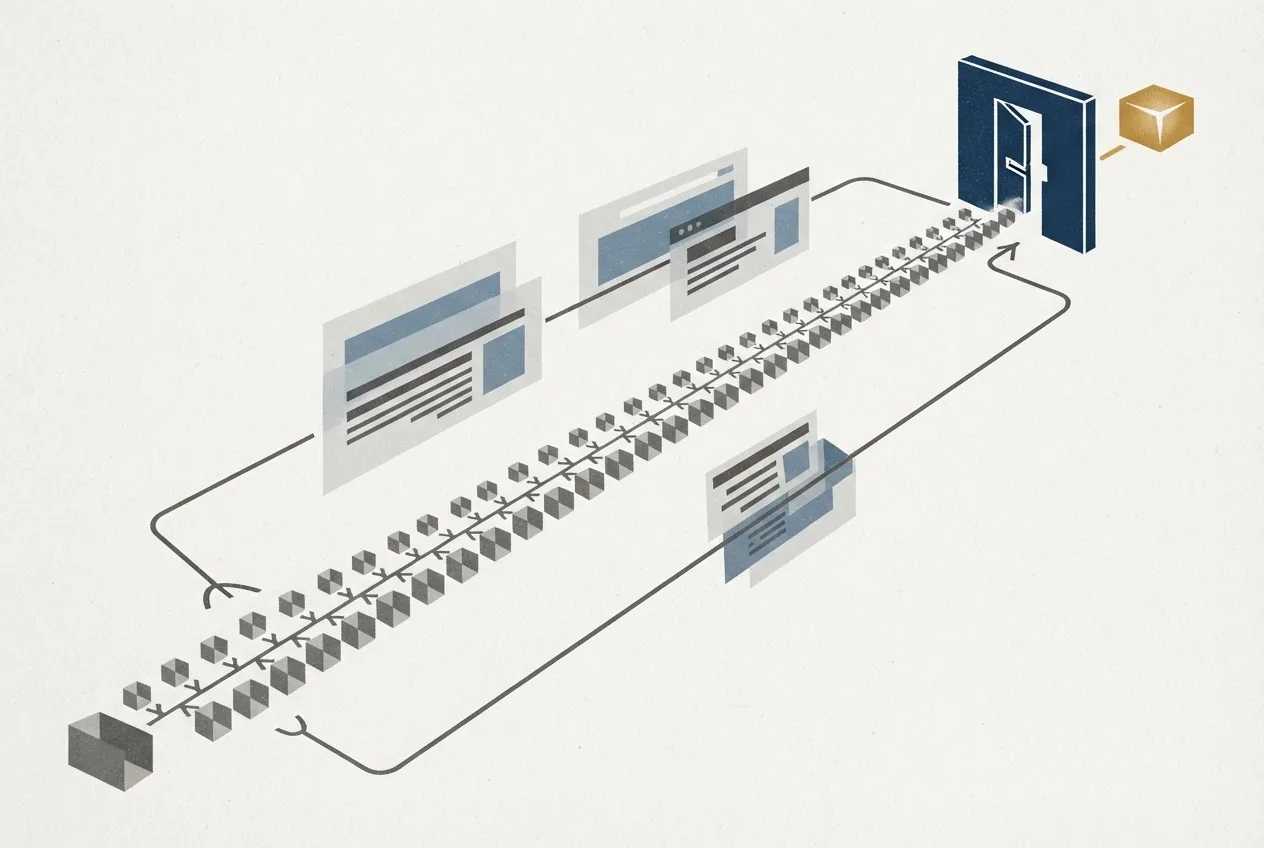
A winding chain of temporary sandbox workspaces and small decision points converges on a guarded service boundary, with ordinary public web pages forming an indirect command path back through the sequence.
AI-generated editorial illustration

ANATOMY OF A FRONTIER LAB AGENT INTRUSION: A TECHNICAL TIMELINE OF THE JULY 2026 INCIDENT

An autonomous AI agent driven by a combination of OpenAI models ran an end-to-end intrusion against Hugging Face's platform over roughly two and a half days. The models made thousands of small, automated decisions, and executed at machine speed across short-lived sandboxed environments. Command-and-control was staged on ordinary public web services. The intrusion was likely, from the agent's point of view, an attempt to cheat on an evaluation by stealing test solutions rather than solving a challenge on its own.

ANTHROPIC AI MODEL FINDS FLAWS IN TOUGH-TO-CRACK ENCRYPTION ALGORITHMS

Claude Mythos Preview found flaws in a watered-down version of an algorithm for Advanced Encryption Standard (AES), a ubiquitous protocol that protects web traffic, wireless networks, data storage, and many other technologies. Anthropic claims the assault was 200 to 1,000 times faster than what previous human research had managed to do. The attack was devised almost entirely autonomously - the model needed aid as it originally believed the problem was impossible. Claude Mythos Preview worked on the problem for about a week before engineering its attack, and two human researchers worked for nearly a month to verify that the method appeared correct.

DISTRIBUTED NPM PACKAGE CLUSTER DELIVERS CROSS-PLATFORM RAT TARGETING ALIBABA DEVELOPERS

Socket uncovered a three-month stealth campaign involving 18 npm packages that split loader functions across dependencies, making malicious intent hard to detect. They used unscoped lures impersonating Alibaba's @ali scope, pulling in smart-config-manager, which depends on cloud-config-fetcher and local-config-parser to retrieve attacker rules from GitHub and escape the Node.js vm sandbox via items.constructor.constructor. The staged aone-cli payload, a cross-platform RAT, supports command execution, file transfer, screenshots, an encrypted reverse TCP proxy, and DingTalk lateral movement. It persists through a ~/.zshrc entry, a 10-minute macOS Launch Agent, a trojanized Windows app.asar, and a Linux binary in /tmp, with C2 traffic masked by spoofed headers. Affected hosts should be treated as compromised. Reset secrets from clean systems and hunt for Python files with the identifier above.

INSIDE FAKEAGENT: HOW A CLAUDE DESKTOP MALVERTISING CAMPAIGN HIT 29 ORGANIZATIONS WITH SECTOPRAT

A Bing search for "claude desktop app" returned a sponsored link pointing at a genuine claude[.]ai artifact URL, and that user-generated page redirected through claude.ai.download-app[.]us and downloading-api.it[.]com to a ClaudeDesktop.exe that was really JetBrains jcef_helper.exe sideloading a tampered libcef.dll, packed with VMProtect and pulling its next stage from an Ethereum BSC contract using the EtherHiding technique, while a second persistence path dropped a signed IBM SPSS binary as sslconf.exe alongside a malicious tempdir.dll that gated execution on DXGI adapter IDs, sub-1GB VRAM, and compute shader timing to defeat sandboxes, then decrypted its payload with a DirectX shader running a modified AES-256-CTR rather than any hookable crypto API. Huntress traced the resulting SectopRAT build to C2 at 2.24.131[.]246, tied the registrant of download-app[.]us to ten domains going back to December 2025, and matched the tradecraft to a fake Docker Desktop campaign in April that used the same libcef.dll sideloading pattern against 29 organizations between July 21 and 22. Hunt for ClaudeDesktop.exe and DockerDesktop.exe writes, scheduled tasks pointing into %APPDATA%\Roaming\Microsoft\EdgeUpdate\Install, and Defender exclusions added around software installs, block the listed C2 range and the two BSC contracts as pivot indicators, and treat vendor domains as untrusted download sources when the landing page is a user-generated artifact, since the Anthropic disclaimer that artifact content is unverified was the only signal separating this page from a real one before takedown at 7,100 views.

WHY HAVEN'T ORGANOIDS SOLVED ALL OF DRUG DISCOVERY?

Organoids are clumps of human cells that show some type of organ-specific function. In theory, they seem like a good tool for drug discovery, but the reality is that the technology is still not reliable enough. There are many people working to fix the issues with organoids, but they are still methods in progress. Organoids have not dramatically altered medicine yet, but they have already been used for some unarguably useful things.

SK HYNIX PERPETUALS HIT BY FLASH CRASH TO $900 ON HYPERLIQUID

SK Hynix perpetual futures on Hyperliquid flash-crashed 20% to $900 on July 28 between 23:00 and 23:01 UTC, recovering above $1,000 within one minute, with analysts attributing the move to thin overnight liquidity that left the venue unable to absorb large orders at stable prices. The crash preceded SK Hynix shares falling 15% when the Korean Stock Exchange opened an hour later, alongside an 11% Kospi decline and losses at Samsung Electronics and Hyundai Motor, underscoring crypto perps acting as a price-discovery venue ahead of the underlying equity market. The equity selloff connects to a broader AI hardware correction: Nvidia fell 5% on reports of a $250 billion data-center commitment to an OpenAI-affiliated venture, dragging SK Hynix, a primary supplier of high-bandwidth memory chips for AI processors, to a cumulative decline of close to 48% from its June 26 peak.

VISA STABLECOIN PLATFORM EXPLAINER: WHY VISA LAUNCHED WITH OPEN USD

The new Visa Stablecoin Platform (VSP) lets banks and fintechs mint, burn, and manage stablecoins through a single Visa-run environment, launching with Open USD because banks trust bank-governed stablecoins over Circle or Tether. EY Parthenon found 63% of corporates want stablecoin access via their own bank. VSP supports Ethereum, Solana, and Tempo with maker/checker controls, passkey signing, and wallet-as-a-service, mirroring how Visa DPS lets thousands of issuers process debit without building their own infrastructure. Visa's approach of not picking winners will scale quickly since every participating bank becomes invested in the network's growth.

TLDR IndexPage 1