Daily Edition · Page 1

THE DAILY INDEX

Technology, AI, software, security, crypto and business

Across today’s newsletters

Today’s Index
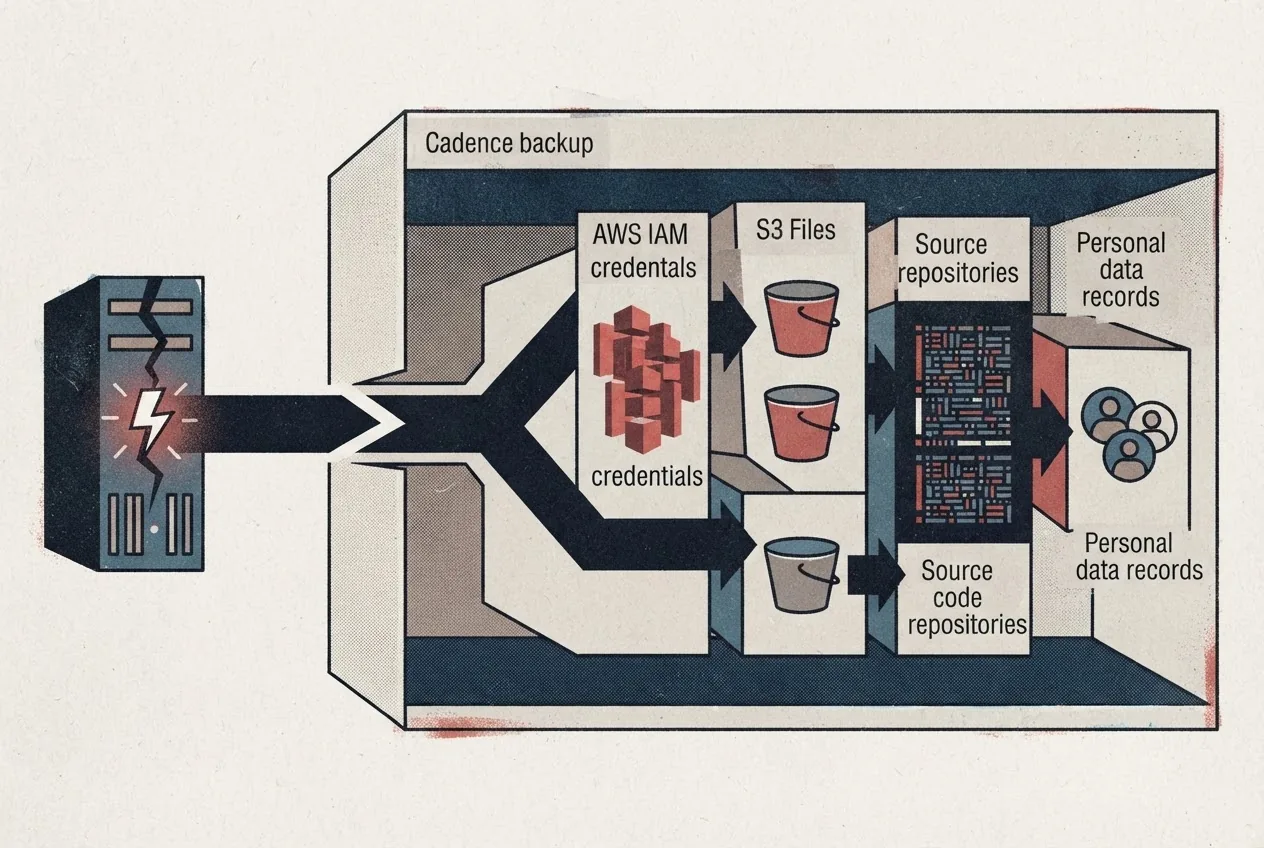
An exposed TeamCity entry point leads into a Cadence backup containing AWS credentials, S3 files, synchronized source code, and personal data, illustrating how one unpatched vulnerability widened access into connected cloud resources.
AI-generated editorial illustration

ATTACKERS BREACHED JETBRAINS CADENCE VIA UNPATCHED TEAMCITY, EXTRACTING AWS CREDENTIALS

JetBrains is urging users of Cadence, its hosted cloud computing service, to revoke and rotate all credentials after unidentified attackers exploited CVE-2026-63077 (CVSS 9.8) to breach its own environment. The vulnerability stems from deserializing untrusted data and allows an unauthenticated attacker with access to a TeamCity server to bypass authentication checks and execute arbitrary operating system commands with the privileges of the TeamCity server process. Attackers reached a 2024 Cadence backup holding AWS IAM credentials, S3 files, PyCharm-synced source code, and personal data, so defenders should treat all executions as untrusted and audit connected AWS accounts, registries, and repositories for activity since August 8.

LIQUID NETWORK PAUSED AFTER $320M "WHITE-HAT" WITHDRAWAL

~4,000 BTC was withdrawn from the Bitcoin sidechain's federation wallet by purported white-hat hackers via the SideSwap Peg-out Authorization Key, which Liquid says was not itself compromised. An on-chain message read, "We are whitehats, contact us on chain." Blockstream paused the network, exchanges suspended LBTC deposits/withdrawals, and other Liquid-issued assets were unaffected. No confirmation yet on whether funds will be returned or a restart timeline.

ASCII SMUGGLING CROSSES OVER FROM AI PROMPT INJECTION TO PHISHING EVASION

Microsoft researchers observed a high-volume phishing campaign using invisible Unicode tag characters, a technique popularized in AI prompt injection research as ASCII smuggling. Rather than hiding instructions from people while exposing them to AI models, the attacker used the characters to split financial lure words so email filters could not parse them, turning "funding" into fun, an invisible tag character, then ding. The code points come from the deprecated Unicode Tags block, U+E0000 to U+E007F, which renders as nothing at all, and Microsoft surfaced the campaign while hunting for prompt injection in Defender for Office 365, where the first version of the signature kept firing on the England, Scotland, and Wales flag emoji because each is built from a base flag code point plus an invisible tag sequence. Defenders should strip invisible Unicode before content signatures run, treat unexplained tag characters as a high-confidence anomaly, and apply the same normalization upstream of any AI assistant that ingests email.

DEEPSEEK PLANS LARGE HUAWEI CHIP ORDER FOR NEW INNER MONGOLIA DATA CENTRE

DeepSeek is preparing a large order of Huawei AI chips to power a reported one-gigawatt data center in Ulanqab, Inner Mongolia, which could begin partial operations in late 2027 or early 2028. Nvidia's most capable accelerators can't legally sell into China, leaving Huawei's Ascend family as one of the few domestic options at this scale. DeepSeek has already been tuning models for Ascend, its V4 model launched in April built for the Ascend 950, prompting Chinese cloud providers to order hundreds of thousands of units. Nvidia's Jensen Huang has called this shift a “horrible outcome” for the US, since every model optimized for Ascend chips away at CUDA's ecosystem advantage.

PAYMENT CHANNELS: 1 MILLION PAYMENTS PER SECOND

A new Solana primitive called payment channels addresses the per-call signature bottleneck in agentic micropayment workflows by letting agents authorize a spending ceiling once, meter usage off-chain via signed messages at zero transaction cost, and settle the full session in a single on-chain transaction across the x402 and MPP protocols. Funds remain non-custodial throughout, held in program-controlled escrow rather than operator balances, unlike prepaid credit systems where balances are tracked off-chain by the service provider. Benchmarks showed 100,000 unique wallets processing over 1 million payments per second, equivalent to more than 80 billion payments in 24 hours at a processing cost of $0.0078 per million payments. The spec is public, and the program is open source. Alibaba Cloud launched live inference endpoints with payment channels on day one.

TLDR IndexPage 1