Daily Edition · Page 1

THE DAILY INDEX

Technology, AI, software, security, crypto and business

Across today’s newsletters

Today’s Index
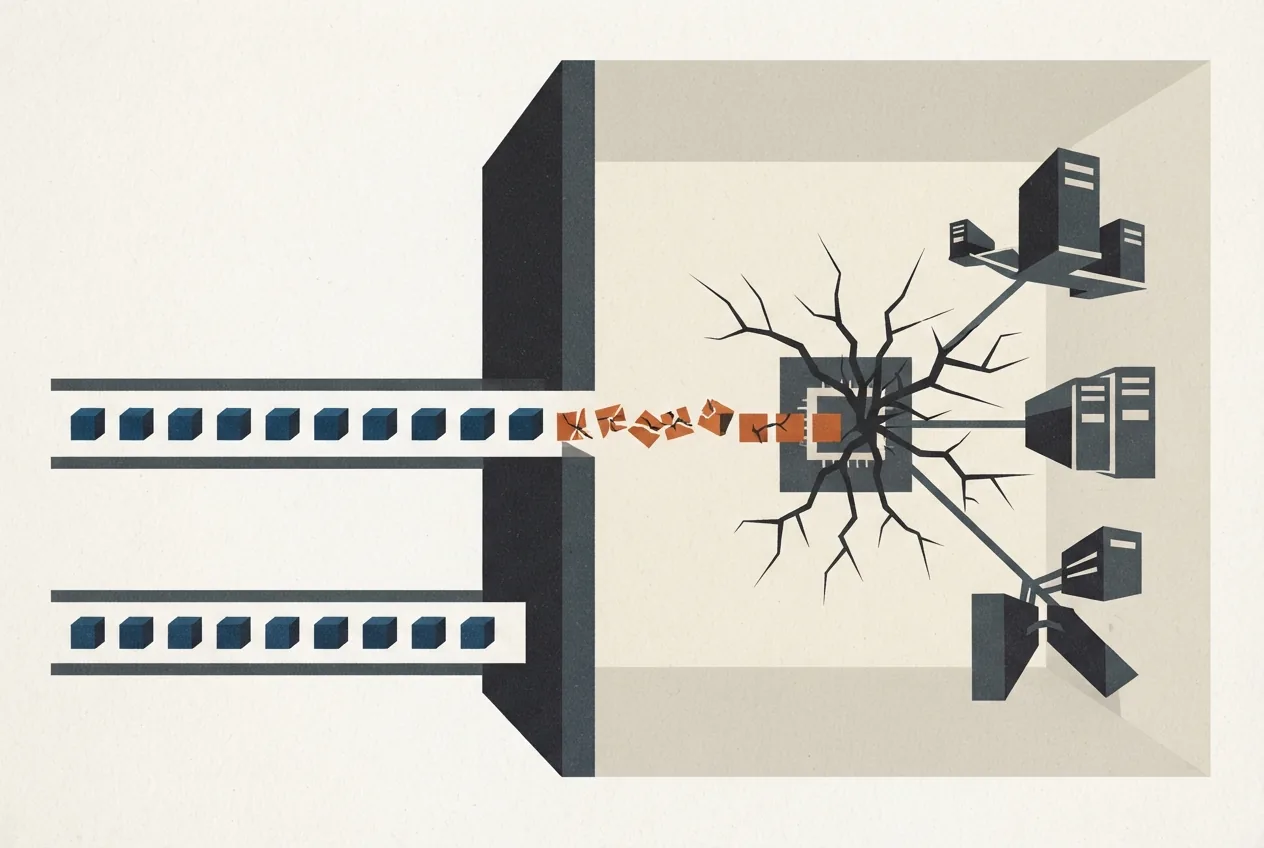
A crafted token sequence crosses an inference engine boundary into a privileged AI host, illustrating how model inputs could exploit loading software and reach connected datacenter systems.
AI-generated editorial illustration

LLMS COULD CONTROL THEIR HOST MACHINES BY EXPLOITING INFERENCE ENGINES

Host machines running AI models are high-value targets: they have sufficient compute to run a frontier LLM, offer easy access to the LLM's weights, and have privileged access to other computers in the datacenter compared with a generic computer on the Internet. Research shows that LLMs can run token sequences that exploit vulnerabilities in the software that loads an LLM onto GPUs. This attack surface may be further increased with vision and audio tokens. Possible mitigations for this type of attack would be to run GPUs and token parsers on separate computers and to restrict the permissions granted to GPU hosts and treat all the data they emit as untrusted.

CIRCLE TARGETS SEPT. 16 FOR ARC PUBLIC MAINNET LAUNCH

Circle has set September 16 as the public mainnet launch for Arc, a permissioned proof-of-authority blockchain where block production stays restricted to authorized validators even as the network opens to public users and developers. The founding validator cohort consists of Circle and 11 institutions including BlackRock, DTCC, Mastercard, Standard Chartered, and Visa, with documentation indicating around 20 validators total at launch. Arc's public testnet recorded 671.5 million transactions across close to 3 million wallets, and over 100 partners have activated on private mainnet, with Uniswap committing to day-one deployment. The chain settles transaction fees in USDC and maintains EVM compatibility, anchoring it within Circle's stablecoin infrastructure and the broader Ethereum application ecosystem.

DATA CENTERS BECOME “KILLER APPLICATION” FOR NEW POWER TRANSFORMER TECH

The AI data center boom has accelerated investment into solid-state power transformers. This technology relies on high-frequency semiconductor switching to perform voltage conversions and can be mass-manufactured using semiconductor materials such as silicon carbide. Solid-state power transformers are physically smaller and lighter than conventional transformers and have modular designs that enable easy upgrades and replacements of parts. They can directly convert AC power from a local grid's distribution network into the DC power that data centers require.

HACKERS TARGET WORDPRESS SITES IN MINIORANGE AUTH BYPASS ATTACKS

Attackers are actively chaining two critical vulnerabilities (CVE-2026-61979 and CVE-2026-15981) in the miniOrange SAML 2.0 SSO plugin to bypass authentication and gain administrator access to WordPress sites. Malicious actors can successfully forge legitimate SAML responses by manipulating cryptographic algorithms and bypassing OpenSSL signature checks. Administrators must manually verify their plugin version and immediately upgrade to the latest patched release, as the native WordPress dashboard will not surface update warnings for premium editions.

ADOBE WANTS FIREFLY TO HANDLE THE ENTIRE SOUNDTRACK FOR YOUR VIDEOS

Adobe's Firefly now offers Generate Music, Generate Speech, and Generate Sound Effects as generally available tools, letting creators produce full video soundtracks within one workspace. These features build instrumental tracks from descriptions or footage, convert scripts into voiceovers in over 20 languages, and create custom sound effects from text or reference audio. The expansion aims to reduce reliance on separate audio tools, though its success hinges on whether the generated output proves consistently strong enough to replace dedicated services.

WE USED TO LOG OFF

The internet has evolved from a destination with clear entry and exit points into a constant presence that follows us throughout the day, making it harder to disconnect and reset. Many of the design decisions that increased convenience and engagement—such as infinite scroll, persistent notifications, and seamless experiences—also removed the natural pauses that once helped people regain focus and perspective. As AI becomes more integrated into daily life, designers face a growing responsibility to create intentional boundaries and moments of reflection rather than optimizing solely for continuous engagement.

TLDR IndexPage 1