Daily Edition · Page 1

THE DAILY INDEX

Technology, AI, software, security, crypto and business

Across today’s newsletters

Today’s Index
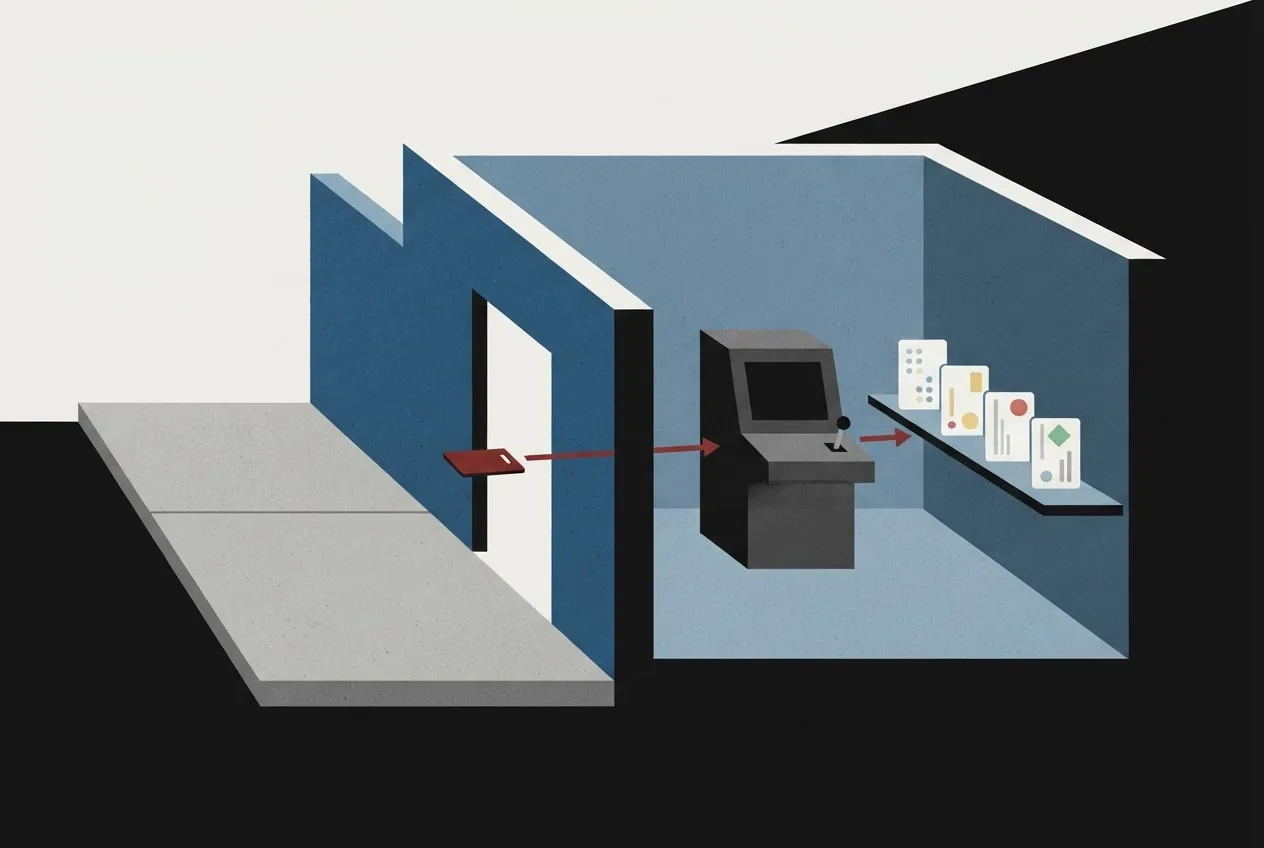
An open service entrance leads directly into an AI gateway control room, where an incoming request reaches a command terminal and exposes several provider credential cards.
AI-generated editorial illustration

CRITICAL BIFROST AI GATEWAY FLAW LETS ATTACKERS RUN COMMANDS WITHOUT CREDENTIALS

Bifrost, an open-source AI gateway for 20+ LLM providers, ships with management auth disabled by default, so a single unauthenticated POST to /api/mcp/client can register a stdio MCP client and run arbitrary commands as the gateway user (CVE-2026-90898, CVSS 9.8). That exposes every stored provider API key. The official Docker image binds the management API to 0.0.0.0, and v2.0.0 only fixed a related plugin-loading flaw (CVE-2026-86242, CVSS 8.1). Upgrade to transports/v2.1.0 or set governance.auth_config.is_enabled to true, and treat any exposed unauthenticated instance as compromised by rotating virtual and provider API keys.

CLAUDE DISCOVERS A NOVEL ENZYME SYSTEM WITH CRISPR-LIKE REPEATS

Claude autonomously discovered a novel enzyme system that is associated with an array of DNA repeats. The system's function is still unknown, but it is programmable and can perform operations like cutting, copying, and pasting DNA. It is based on a reverse transcriptase previously known to science, but Claude appears to be the first to notice the system's defining features - an associated array of non-coding DNA sequences and an additional accessory protein of unknown function.

CHINA PUTS AI COMPUTE INTO ORBIT WITH SUPERCOMPUTING-1 SATELLITE — ONBOARD PROCESSING AIMS TO CUT EARTH-OBSERVATION DATA PROCESSING FROM HOURS TO MINUTES

China has launched nine satellites into orbit as part of a push to put AI computing in space. The Supercomputing-1 satellite that launched on the mission is designed to capture and process Earth-observation data in orbit instead of sending data back to terrestrial data centers. It features both a high-res optical payload and an image-processing AI computer. Local processing will cut cross-regional data processing times from hours to minutes.

SHOPIFY TO USE META'S MUSE FOR AGENTIC CHECKOUT

Meta's new personal AI agent Muse will be able to browse Shopify merchants and make purchases for users through Shop Pay, giving it access to Shopify's product catalog, payments, and commerce infrastructure. The partnership is an early example of how AI agents could become a new shopping interface while Shopify provides the rails underneath, contrasting with Amazon's decision to block Muse from buying on its site.

CANADA'S BIG SIX BANKS EXPLORE TOKENIZED DEPOSIT SYSTEM

BMO, CIBC, National Bank of Canada, RBC, Scotiabank, and TD jointly announced they're exploring a Canadian-dollar tokenized deposit system, with the first phase focused on moving tokenized deposits efficiently between institutions. The project follows Canada's OSFI clarifying that tokenized deposits are "not legally distinct from traditional deposits," and builds on March's Project Samara pilot testing blockchain-based government bond issuance.

META INTRODUCES CAMERA-FREE AI GLASSES

Meta introduced Ray-Ban Meta Audio, camera-free AI glasses that support music, calls, speech translation, and its Muse assistant, offering an alternative to smart glasses that can record people without their consent. Removing the cameras makes the frames slimmer and lighter at 43 grams, with adjustable temple tips, swappable nose pads, and a battery life of up to 12 hours. Starting at $349, the glasses come in Clubmaster and Burbank styles with prescription options.

TLDR IndexPage 1