Daily Edition · Page 1

THE DAILY INDEX

Technology, AI, software, security, crypto and business

Across today’s newsletters

Today’s Index
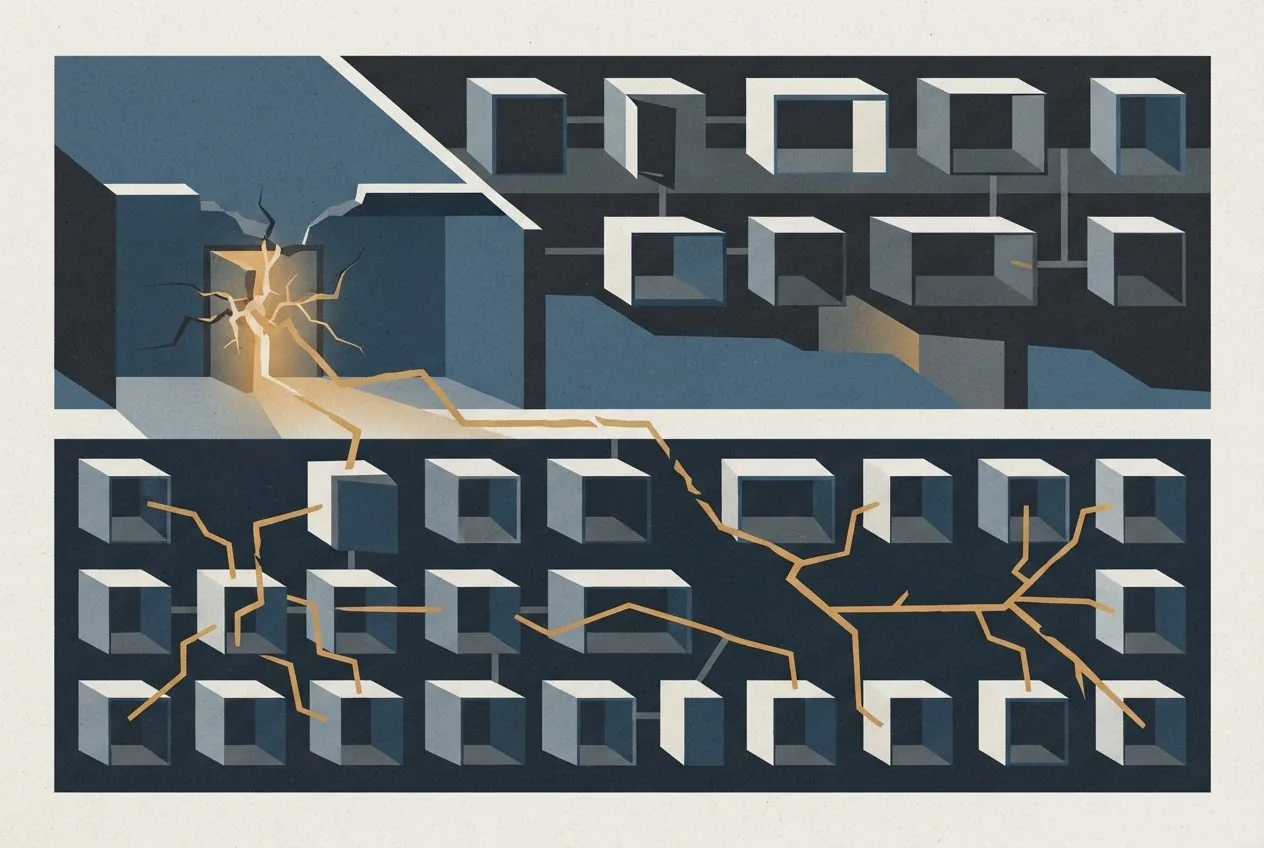
A cutaway service gateway opens into multiple separated database compartments as one exposed key crosses their failed boundary, representing a Cosmos DB gateway flaw that enabled platform-wide access.
AI-generated editorial illustration

COSMOSESCAPE: TAKING OVER EVERY DATABASE IN AZURE COSMOS DB

Wiz Research bypassed Cosmos DB's Gremlin sandbox by abusing .NET reflection to achieve arbitrary code execution on the DB Gateway, then extracted a platform-wide "Cosmos Master Key" capable of retrieving any account's primary key and enumerating every database on the service by tenant or subscription ID, including Microsoft's own internal Cosmos DB-backed services like Entra ID, Teams, and Copilot. The flaw affected private and network-isolated accounts as well, since the DB Gateway itself enforced isolation and was the component compromised. Microsoft deployed a hotfix within 48 hours of disclosure, eliminated the master key entirely, and completed a hardened architecture rollout by July. There was no evidence of exploitation beyond Wiz's own testing.

NOT JUST OPENAI: NOW ANTHROPIC SAYS ITS INTERNAL MODELS GOT ONLINE AND CYBERATTACKED 3 OTHER ORGANIZATIONS

Anthropic discovered that Claude models unintentionally reached the public internet during supposedly isolated cybersecurity evaluations and compromised systems belonging to three real organizations using weak passwords and unauthenticated endpoints. The incidents involved Opus 4.7, Mythos 5, and an internal research model, with the earliest dating back to April, and were uncovered only after Anthropic reviewed more than 141,000 test sessions following OpenAI's similar incident. Anthropic suspended its cyber evaluations and notified the affected organizations, two of which had not detected the activity.

DATA CENTER BACKLASH COULD SLOW CIOS' AI PLANS

Opposition to new data centers is becoming a material infrastructure and budgeting risk, with protests organized across 42 states, construction moratoriums active in 10 states, and new large-load electricity tariffs emerging across the country. CIOs may need to secure capacity earlier, reconsider cloud and colocation cost assumptions, diversify regions and providers, and treat compute and power as strategic supply-chain dependencies.

MCP IS GOING STATELESS: WHAT THE NEW SPEC MEANS FOR AI AGENTS

The Model Context Protocol releases a spec update that drops stateful sessions in favor of stateless HTTP, meaning remote MCP servers no longer require sticky sessions, shared session stores, or instance coordination to function behind a load balancer. Each request now carries its own context in a metadata object, so any server instance can handle any request. The update also replaces MCP's proprietary logging channel with OpenTelemetry and formally standardizes request tracking using W3C Trace Context, letting teams correlate agent tool calls with the rest of their application stack in a single observability backend.

KINDARAILS2SHELL: CVE-2026-66066, CRITICAL ARBITRARY FILE READ AND POSSIBLE REMOTE CODE EXECUTION IN RUBY ON RAILS

CVE-2026-66066 (CVSSv4 9.5) lets an unauthenticated attacker abuse unfuzzed libvips operations during Active Storage image processing to read files accessible to the Rails process, potentially exposing secrets that enable RCE. Only the default Vips variant processor is affected, not Magick. Fixed in Rails 7.2.3.2, 8.0.5.1, and 8.1.3.1 alongside libvips 8.13+ and ruby-vips 2.2.1+, with no in-the-wild exploitation reported as of July 30. Rapid7 urges rotating secret_key_base and other exposed credentials, patching outside normal cycles, and applying Vips.block_untrusted(true) as an interim workaround where upgrading isn't immediately possible.

ESCAPING THE APPLE SANDBOX BY SPAWNING AN EXECUTABLE

CVE-2026-20628 let a sandboxed macOS process spawn a child with the posix_spawnattr_setmacpolicyinfo_np API specifying a more permissive built-in profile like no-network, which grants home directory access, then chain that into a shell config modification and Terminal launch to fully escape the sandbox. Researcher Noah Gregory reported the bug, which Apple patched in version 26.3 by blanket-denying built-in profile assignment for already-sandboxed processes unless they carry the com.apple.private.security.sandbox-spawnattrs entitlement. Defenders should ensure affected Apple devices are updated to 26.3 or later, as no more granular policy comparison was implemented.

TLDR IndexPage 1